Government Payments
Overview
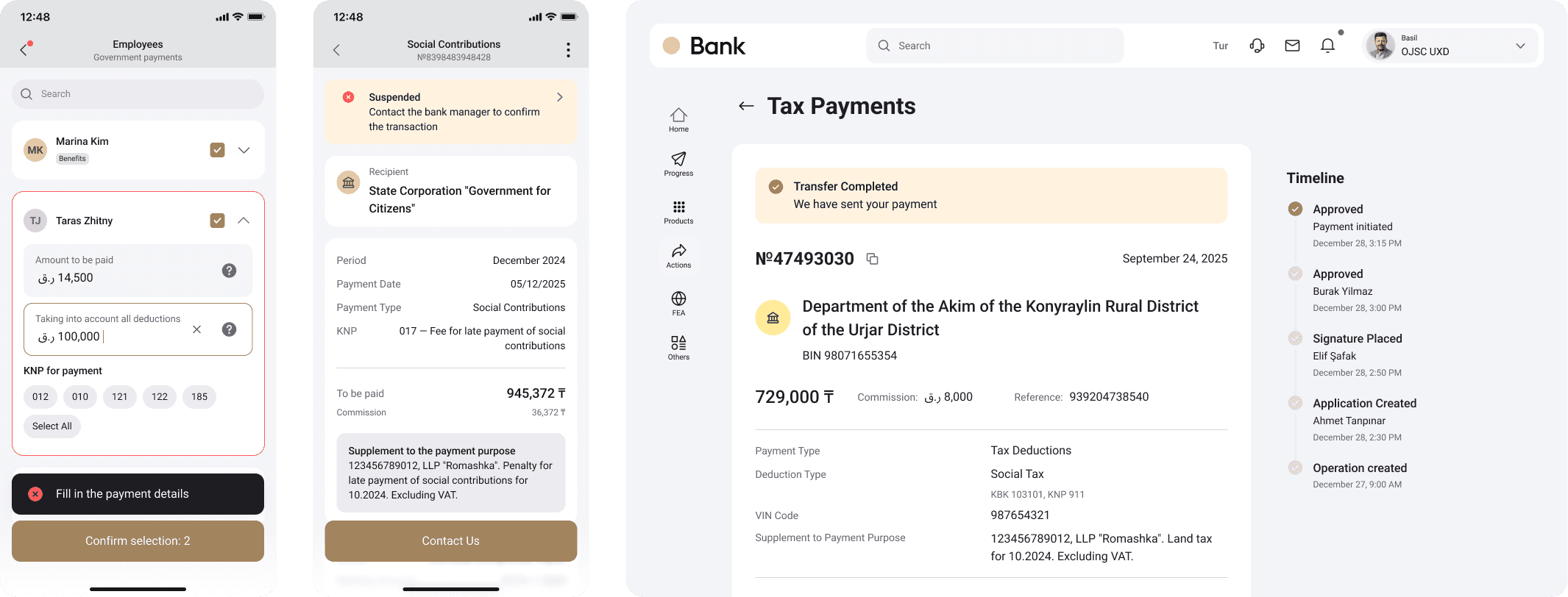
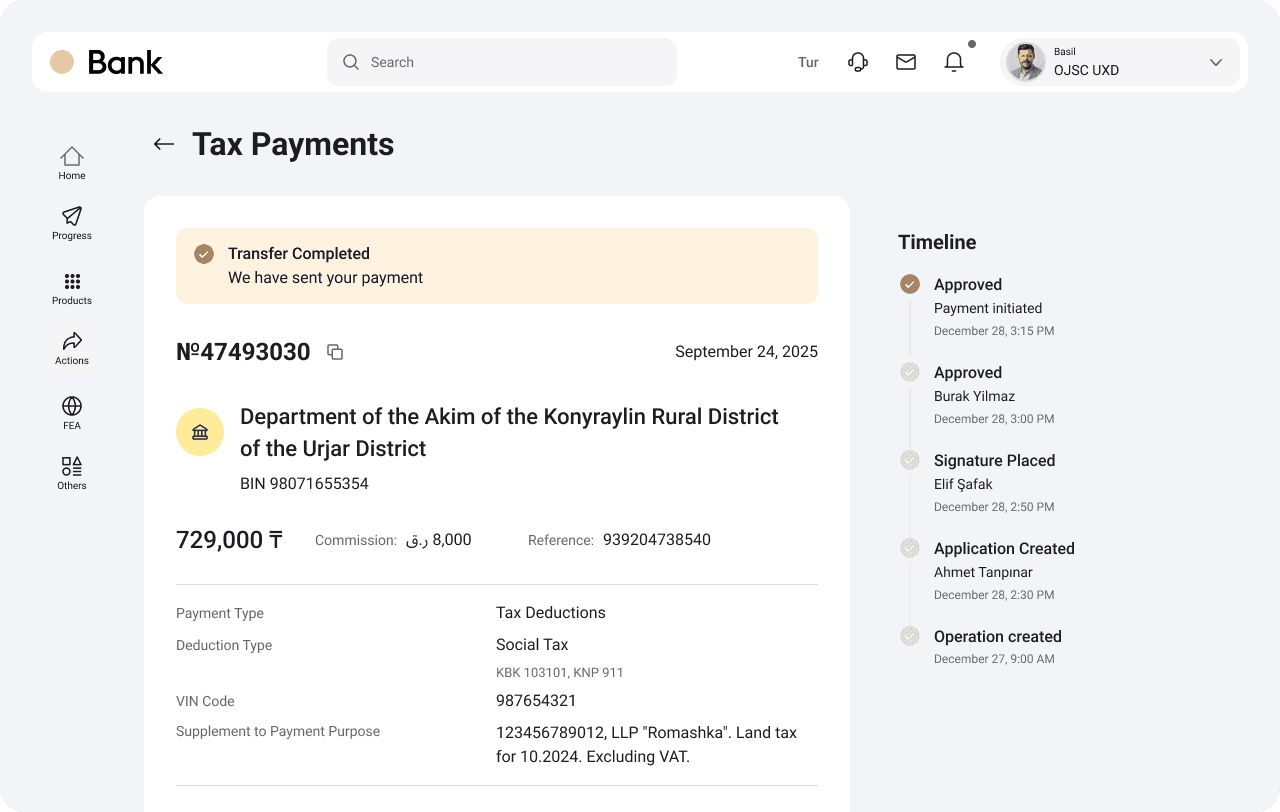
This case describes the design of a government payments platform for a major bank in Qatar. The product enables individuals and businesses to pay taxes, fines, duties, and other government fees through a single digital channel

Product type
Retail + SME Banking (B2C / B2B2G)
~9 months (discovery → production launch)
My role
Senior Product Designer
End-to-end ownership: discovery, UX architecture, interaction design, UI, design system alignment, stakeholder reviews.
Platforms
Business context
Government-related payments are high-responsibility transactions with no margin for error. Incorrect payments lead to refunds, regulatory risk, and high operational costs. The bank’s objective was to: increase adoption of digital government payments, reduce payment errors and support load, provide a compliant, auditable, and scalable solution
The design process
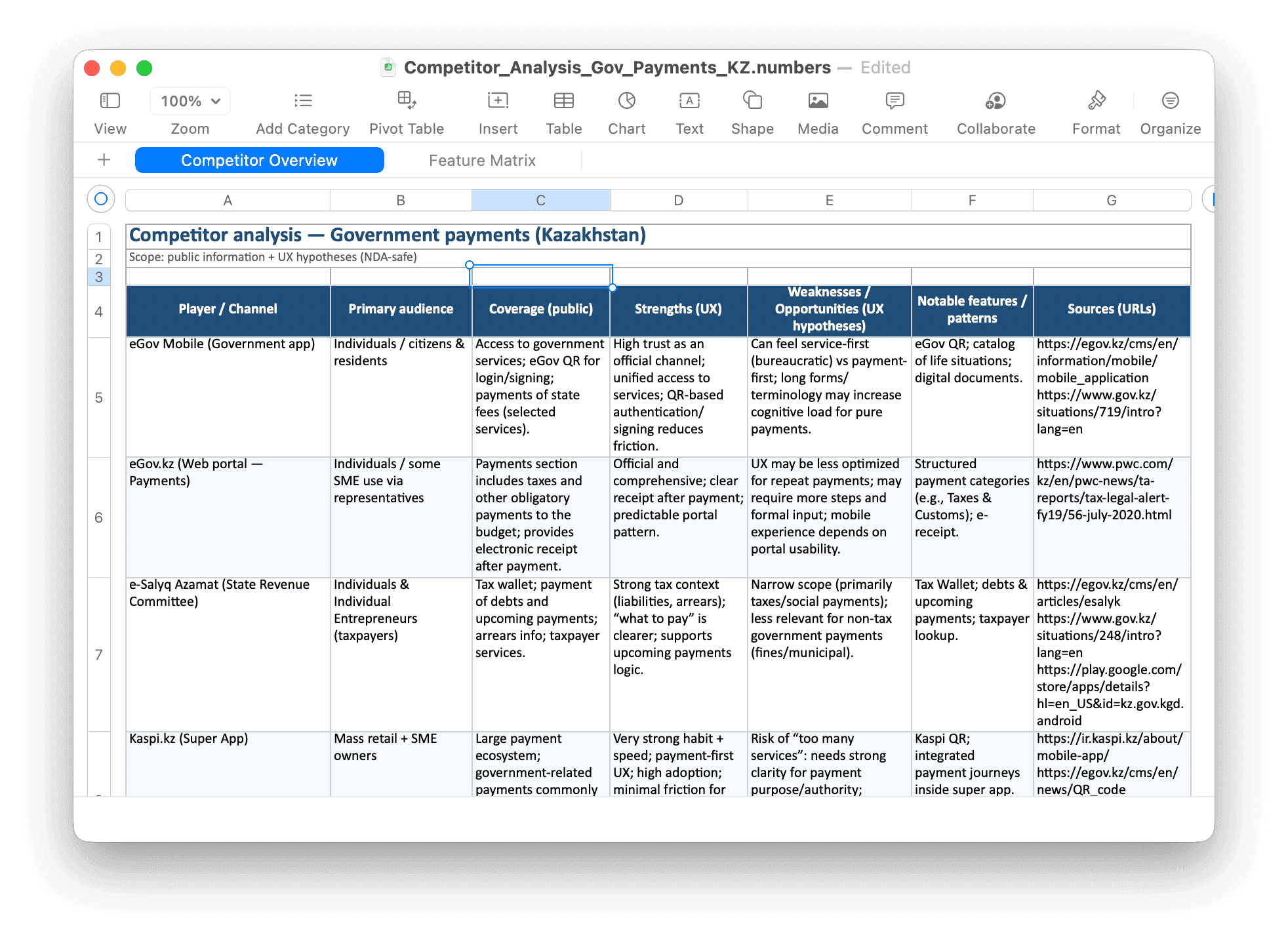
Competitors analysis
User study and hypothesis generation
Prototyping and tests
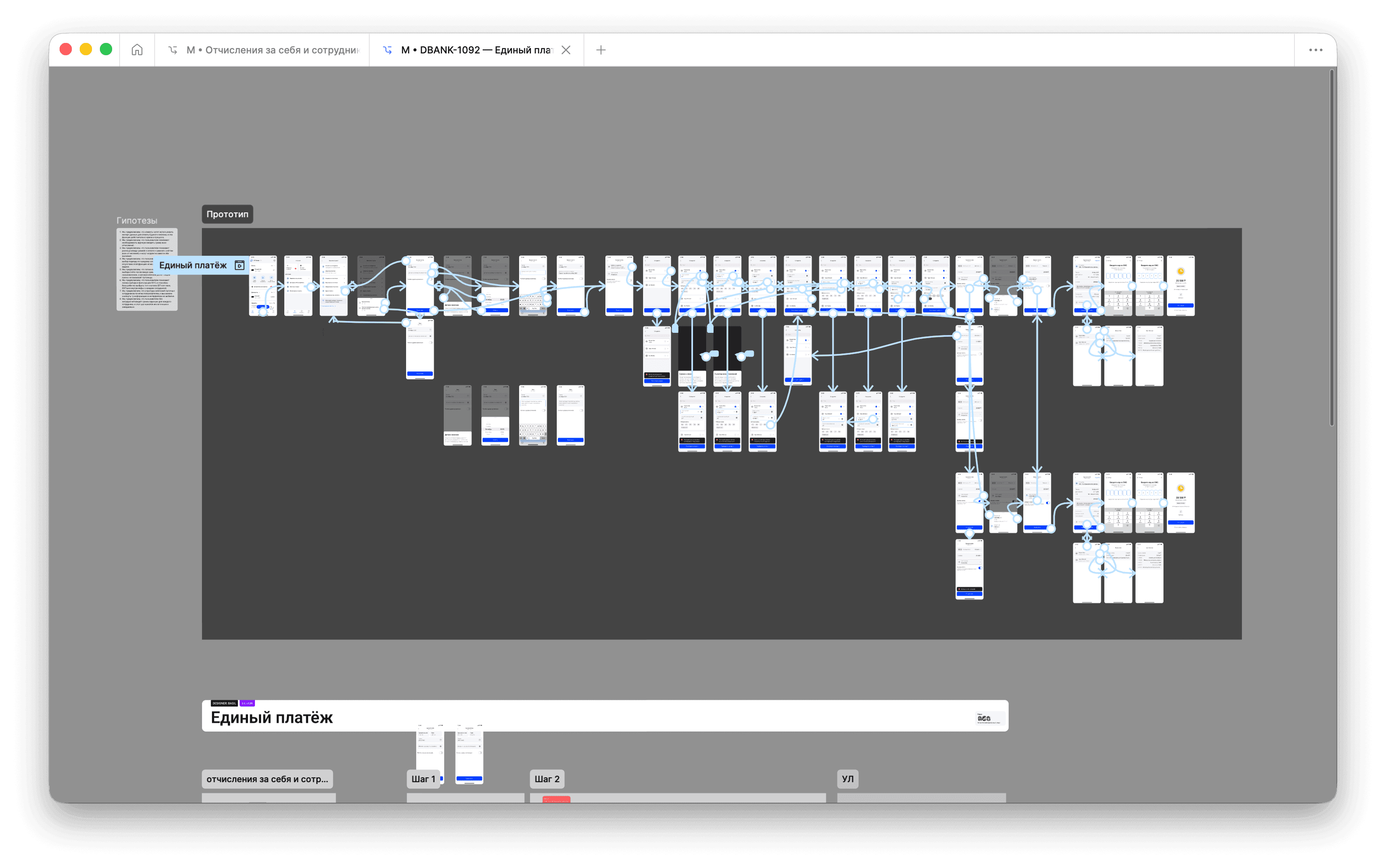
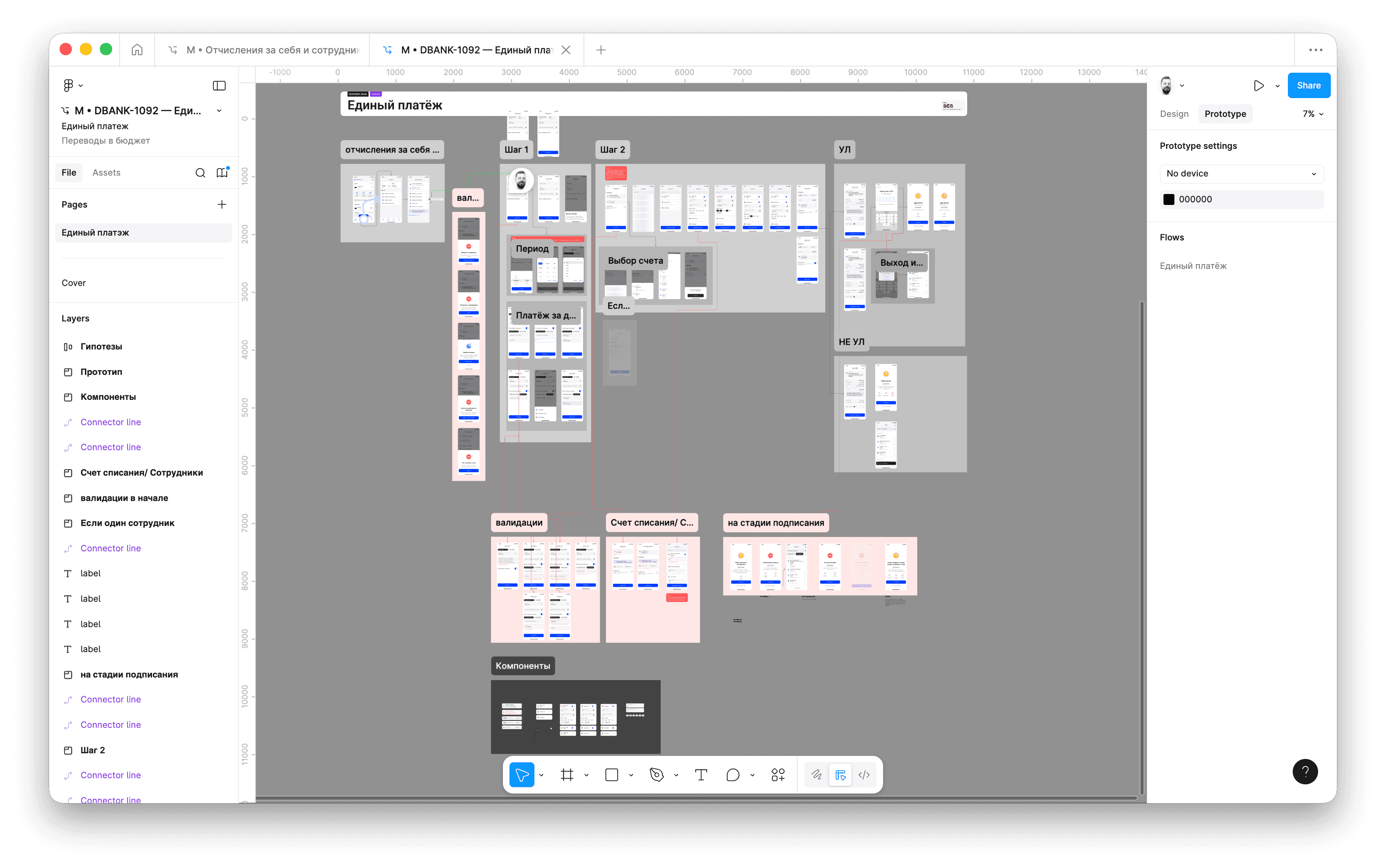
Corner cases and team synchronisation
Iterations
Competitors
At a Qatar Bank entity in Kazakhstan (NDA), I designed the Government Payments experience end-to-end—from research and UX flows to stakeholder/compliance reviews—supporting parallel delivery across Web, iOS, and Android, and validating the final solution through design QA and staging/UAT testing.
JTBD
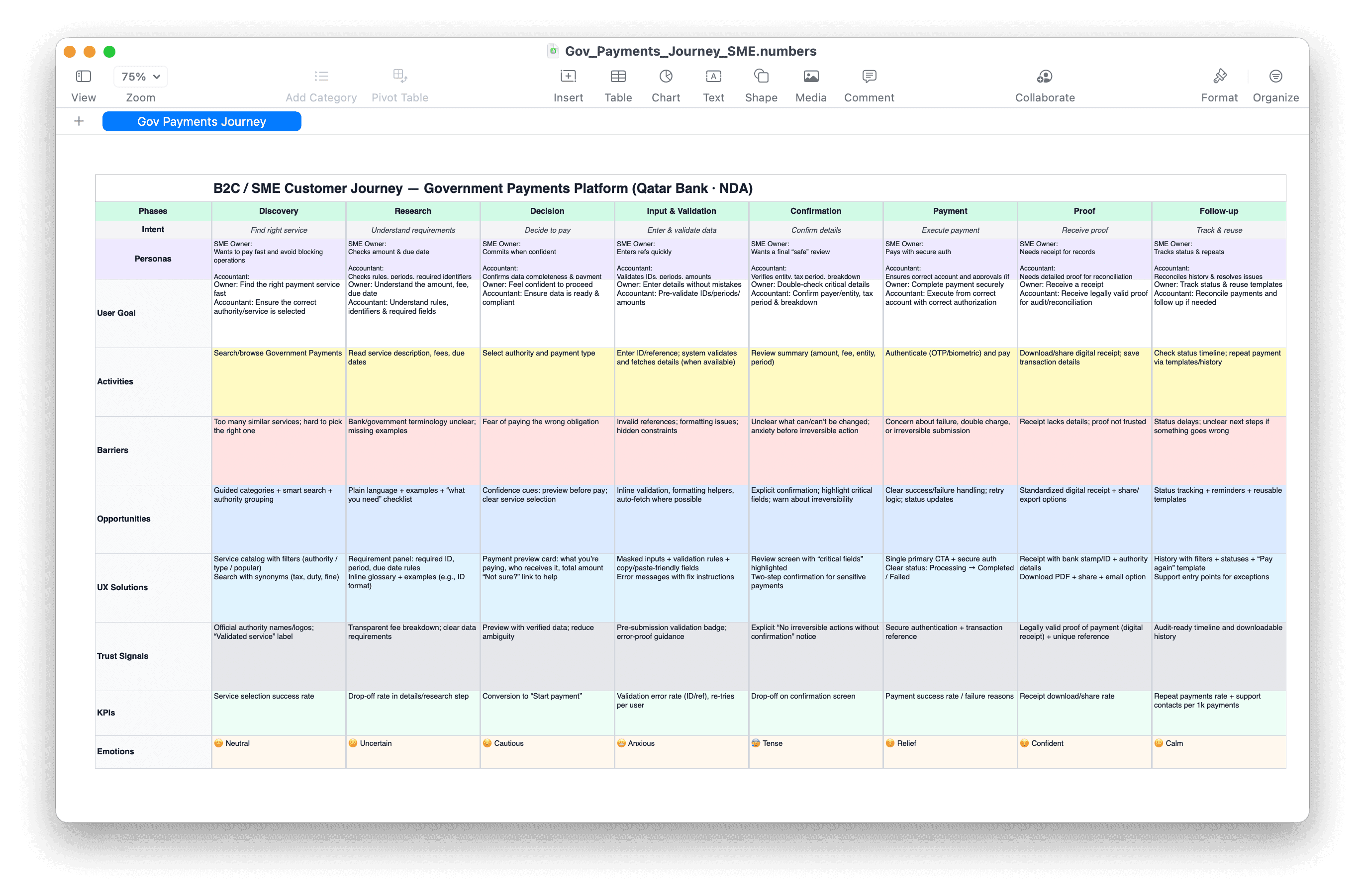
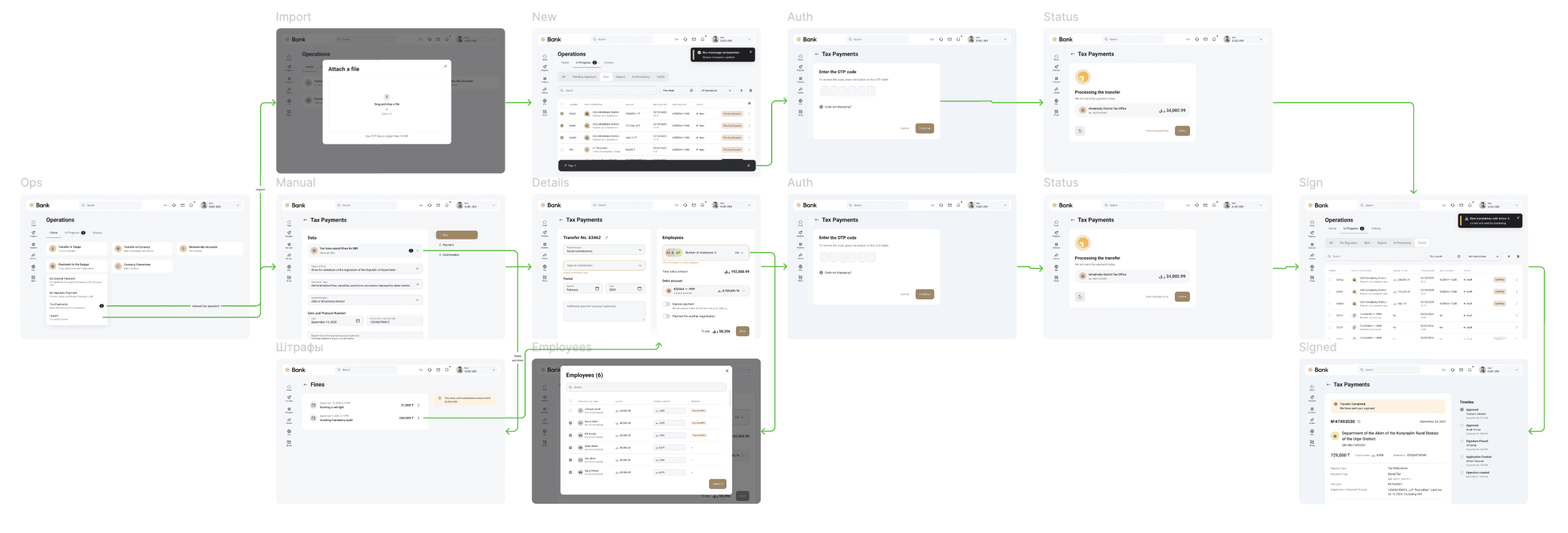
To design a safe and compliant government payments experience, I mapped the end-to-end customer journey across discovery, validation, confirmation, and post-payment stages — focusing on error prevention, trust signals, and legally valid outcomes.
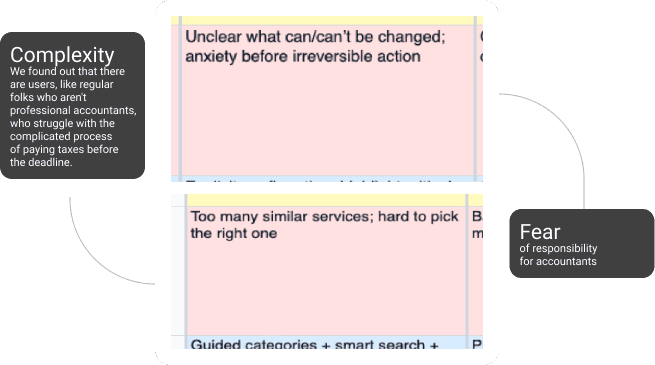
Let's adress some of the user's pain points for this case
UX tests
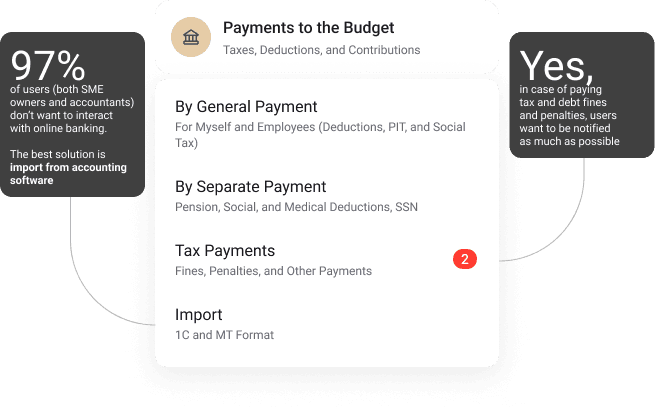
I conduct in-person UX testing to observe real user behavior and validate critical flows, and I also run moderated/unmoderated sessions using tools like Fabuza to record sessions, capture insights, and document actionable findings for the product team.
That's some insights I've recieved through tests:
Corner cases
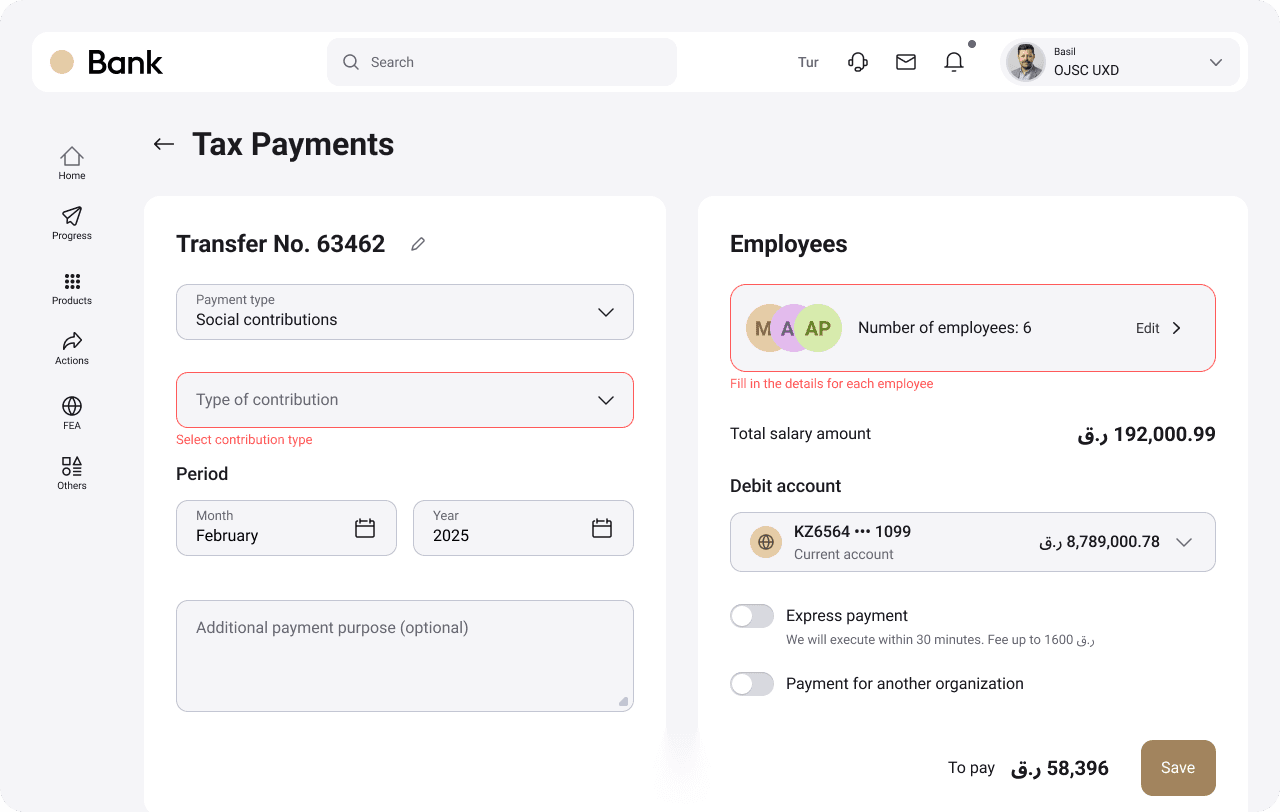
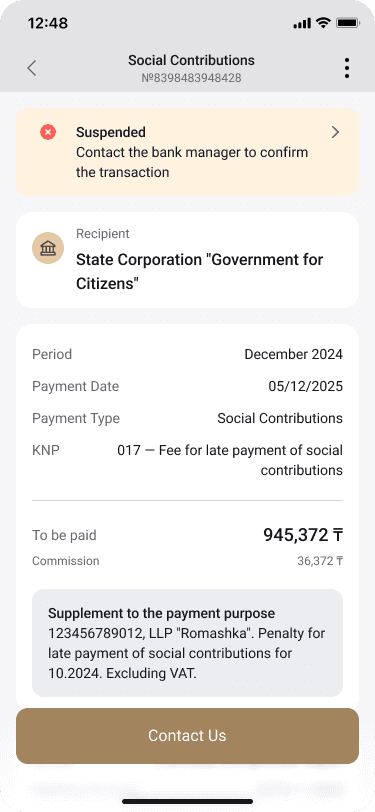
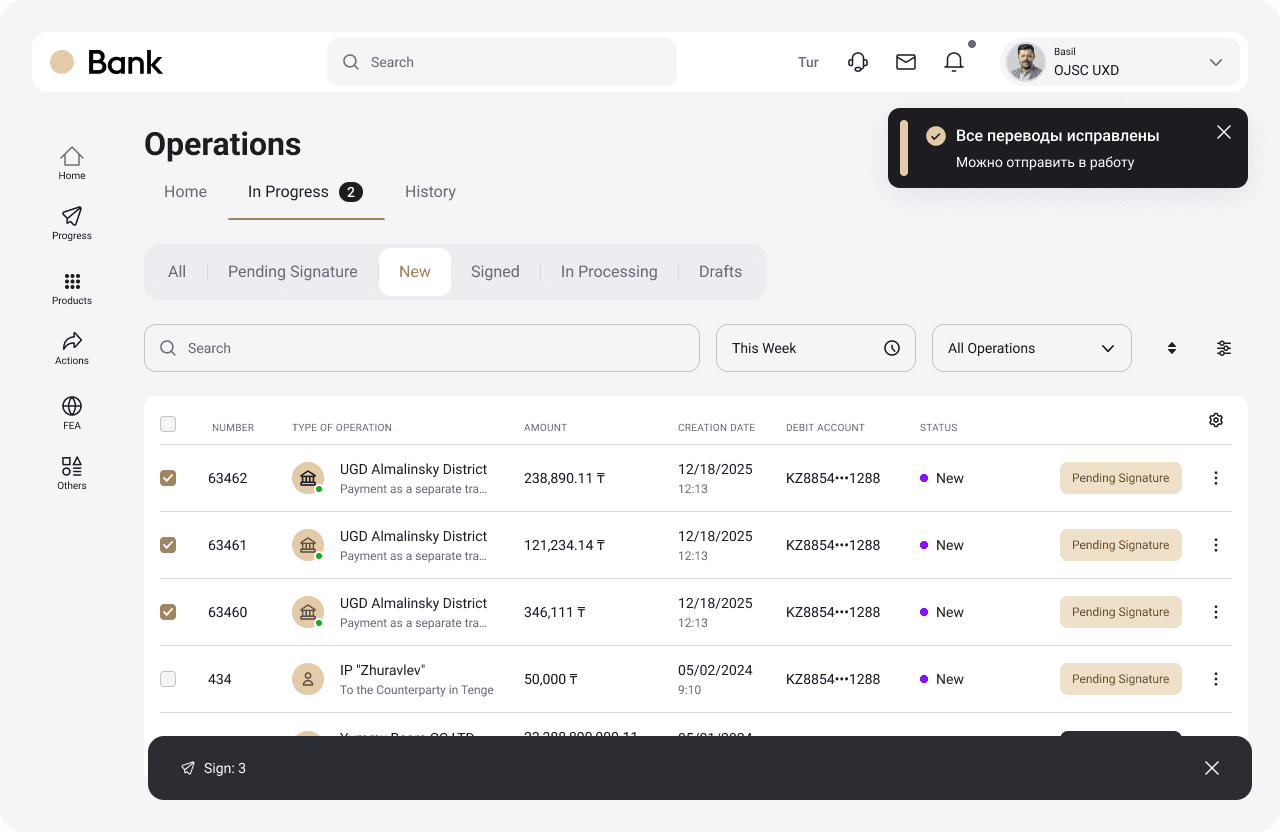
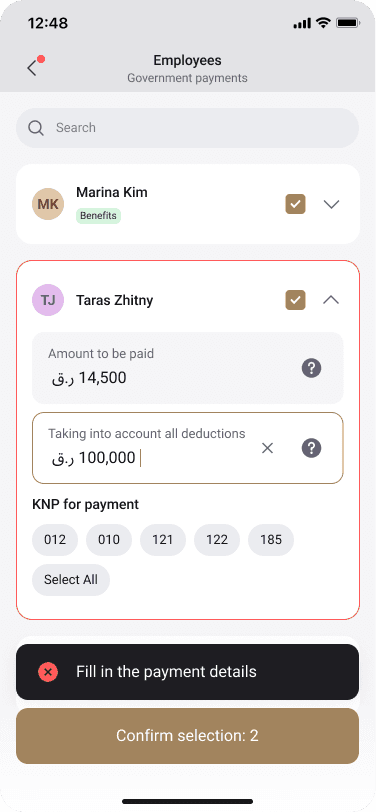
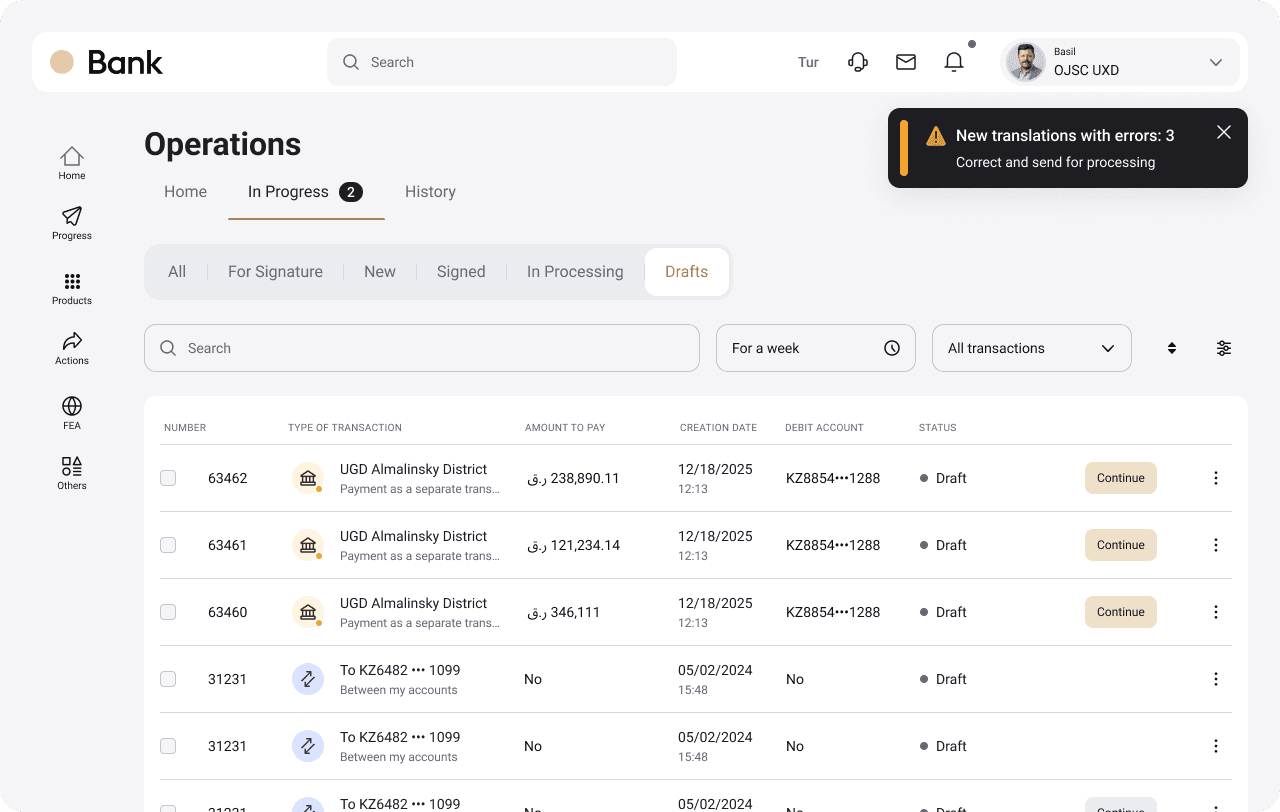
I design and validate corner cases (errors, exceptions, and rare but high-risk scenarios) to ensure critical flows remain clear, compliant, and safe—especially where actions are irreversible, data must be strictly validated, or permissions and limits apply.
Iterations
UX writing
Stakeholders review
Legal team requirements
Design system integration
Development team
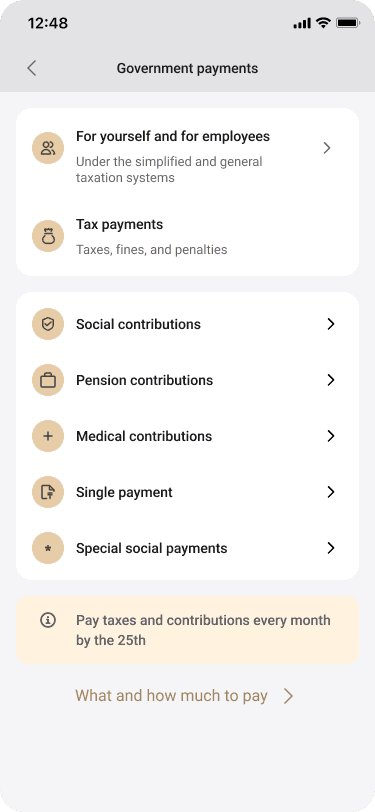
Constraints & Requirements
This project required precision, clarity, and consistency rather than speed or visual expressiveness.
Regulatory and compliance requirements (KYC, AML, audit)
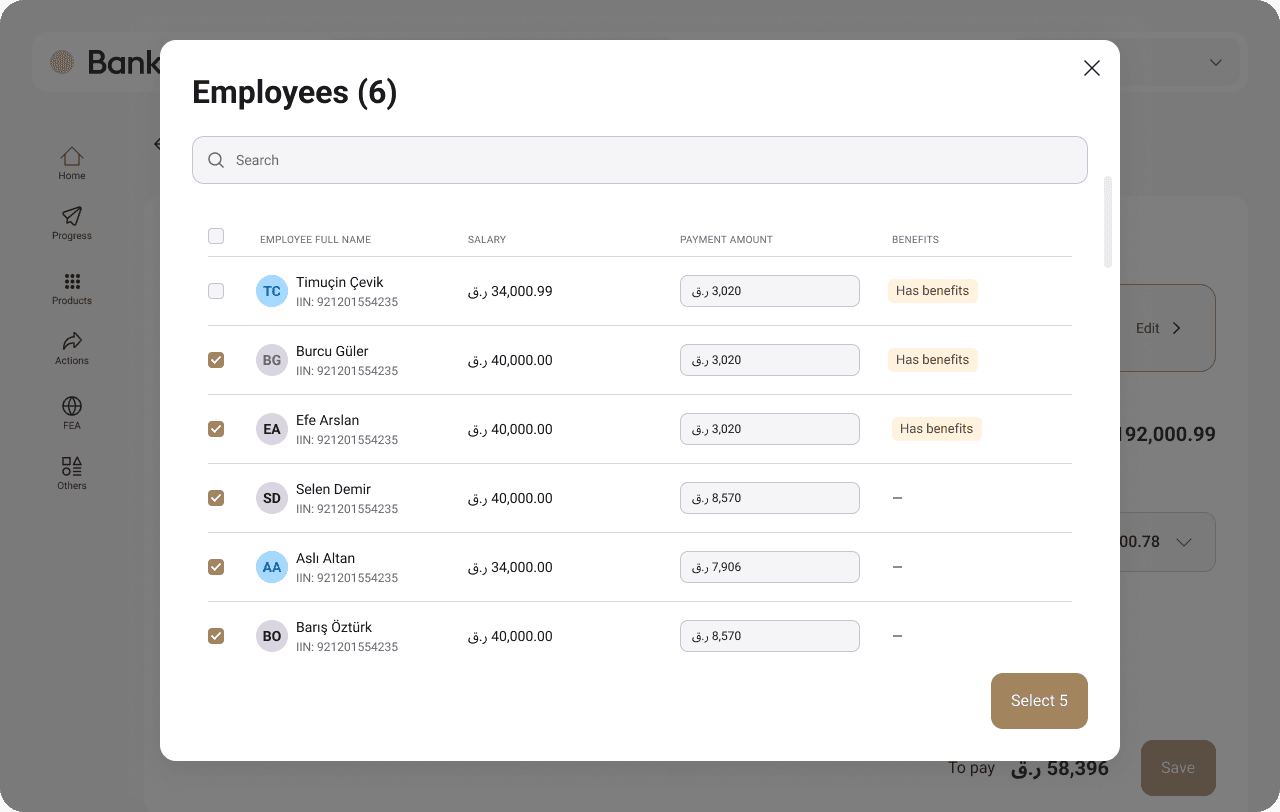
Multiple government authorities, different validation rules
No tolerance for incorrect data submission
Mandatory transaction transparency and confirmation
Results
After launch, the solution demonstrated measurable improvements:
38%
reduction
in payment errors
42%
decrease in related
support tickets
29%
growth in digital
channel adoption
Outcome
The focus was on trust, clarity, and compliance, ensuring users can complete critical payments with confidence. This project demonstrates my experience in designing:
High-responsibility financial flows
Government-related payment systems
Products operating in regulated environments
Scalable UX for retail and SME banking

I’ve had the chance to work with some truly great people across a variety of companies — it was both fun and rewarding. Hopefully one day you’ll cross paths with them, and they’ll have good things to say about what we accomplished together